If you are dealing with blocked drains, you may have searched for what is drain jetting, what is hydro jetting a drain, or how much does drain jetting cost UK. Drain problems are common across UK ...

28Feb

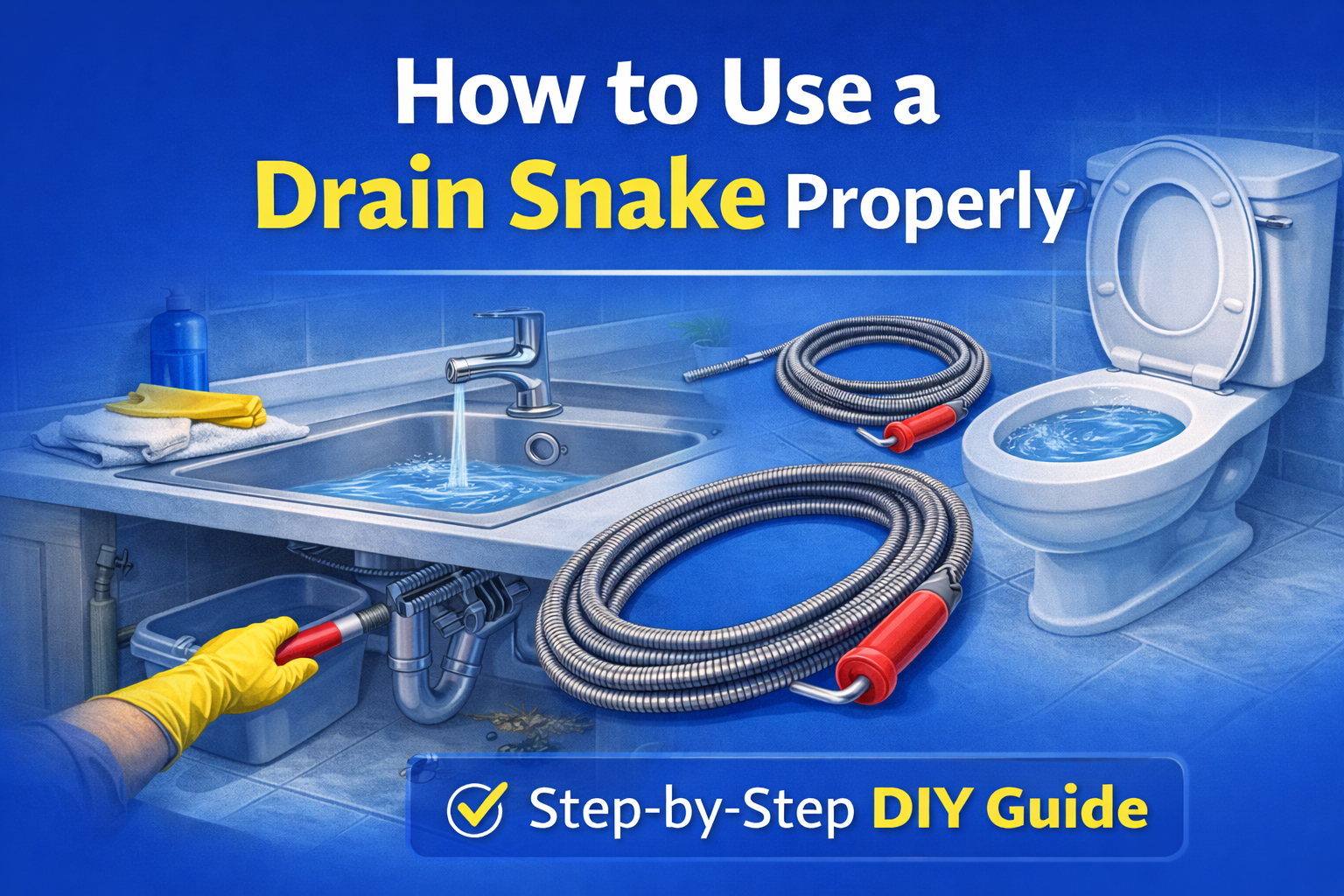
Blocked drains are one of the most common plumbing problems in homes, restaurants, and commercial kitchens. Whether it’s a slow-draining sink, a clogged shower, or a backed-up kitchen pipe, knowing how to use a drain snake can save you time, money, and the cost of calling a plumber.
In this complete guide, you’ll learn:
What a drain snake is
Different types of plumbing augers
How to use a drain snake correctly
Common mistakes to avoid
Safety precautions
FAQs about drain cleaning
This guide is written for both homeowners and business owners who want a safe, cost-effective drain cleaning solution.
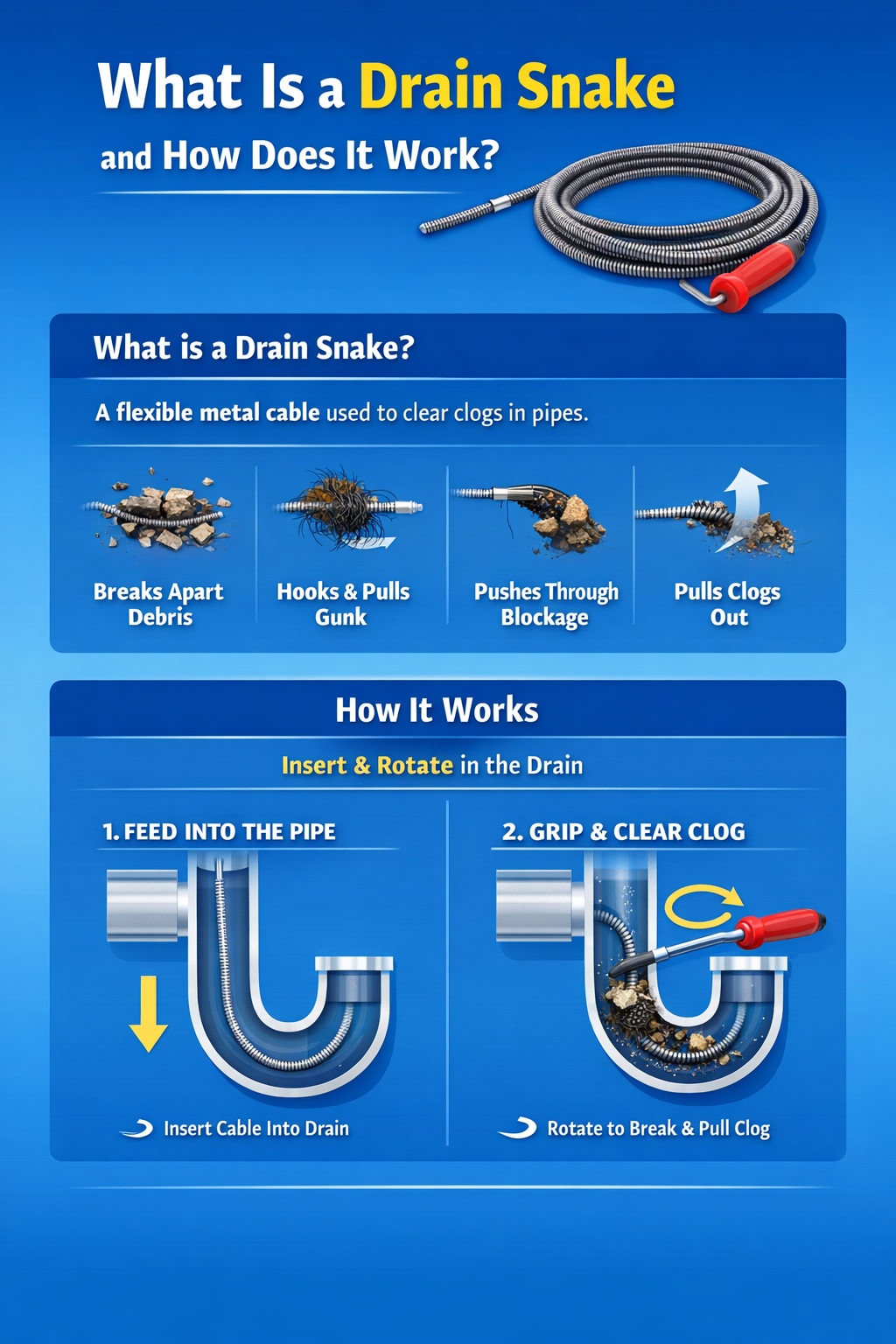
A drain snake, also known as a plumber’s auger, is a flexible metal cable designed to remove clogs inside pipes. Unlike chemical drain cleaners that dissolve blockages, a drain snake physically:
Breaks apart debris
Hooks onto hair and solid waste
Pushes blockages through the pipe
Pulls clogs out
It works by rotating a coiled metal wire into the drain line until it reaches the obstruction.
The twisting motion helps the cable grip the blockage and either remove it or break it up.
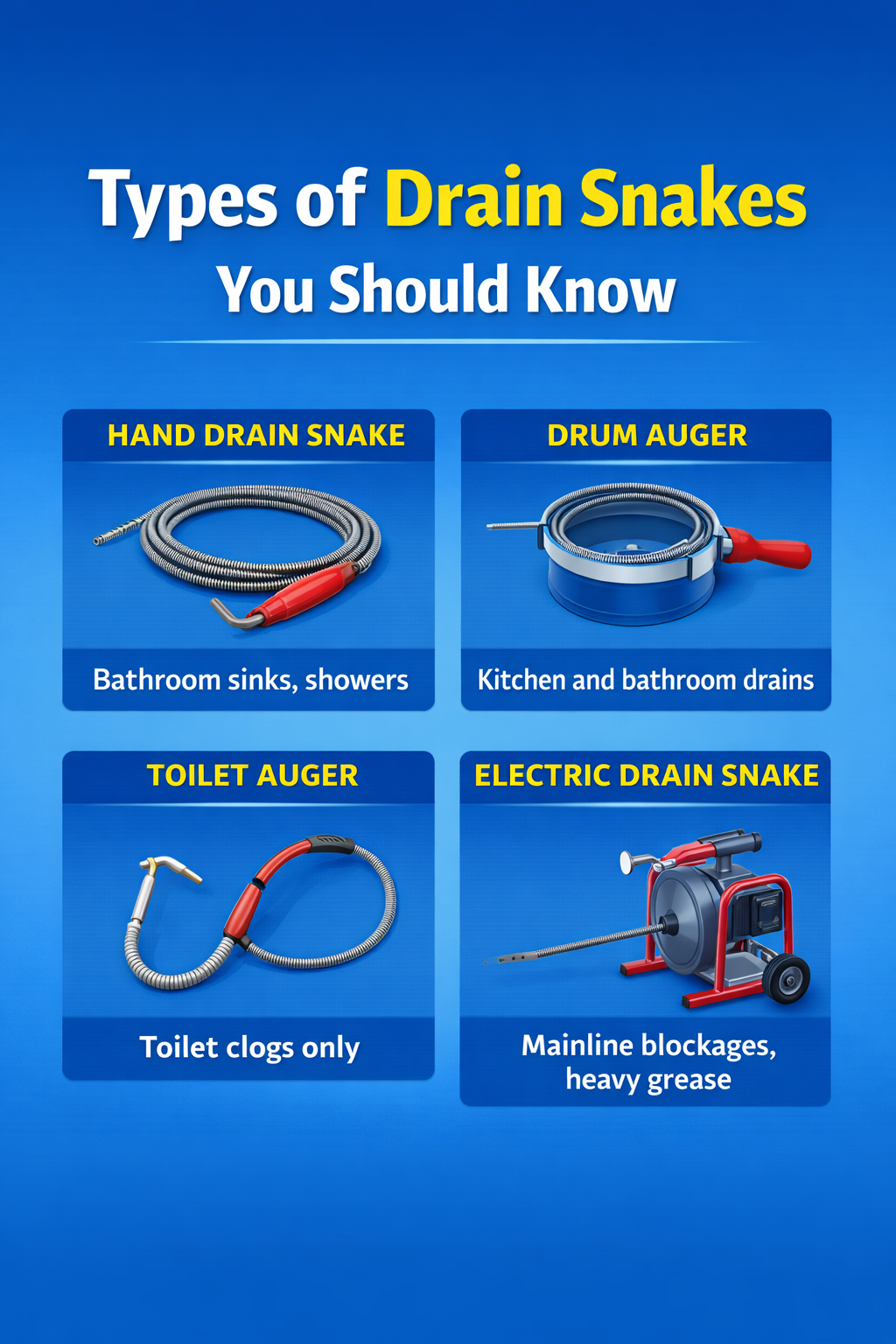
Understanding the type of snake you’re using is critical for effective drain cleaning.
Best for:
Bathroom sinks
Shower drains
Small household clogs
This is the simplest and most affordable option.
Best for:
Kitchen sinks
Bathroom drains
Medium blockages
This version stores the cable inside a drum, reducing mess.
Best for:
Toilet clogs
It has a curved end specifically designed to protect porcelain from scratches.
Best for:
Main sewer line blockages
Commercial kitchens
Severe grease buildup
This is typically used by professionals due to its power.
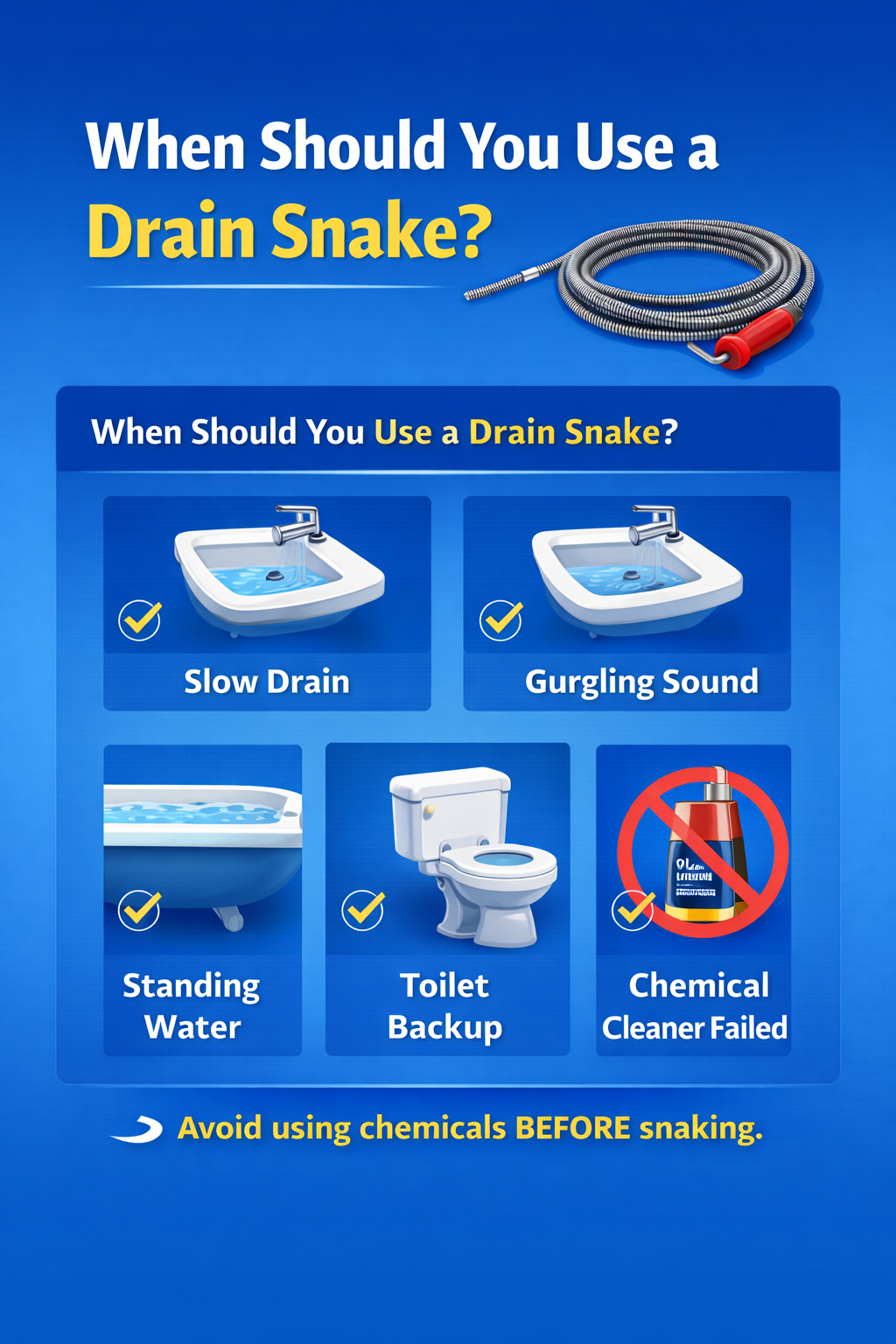
You should use a plumbing snake when:
Water drains slowly
Sink makes gurgling sounds
Shower water pools at your feet
Toilet frequently backs up
Chemical drain cleaners failed
Avoid using chemicals before snaking, as they can cause burns if splashed.
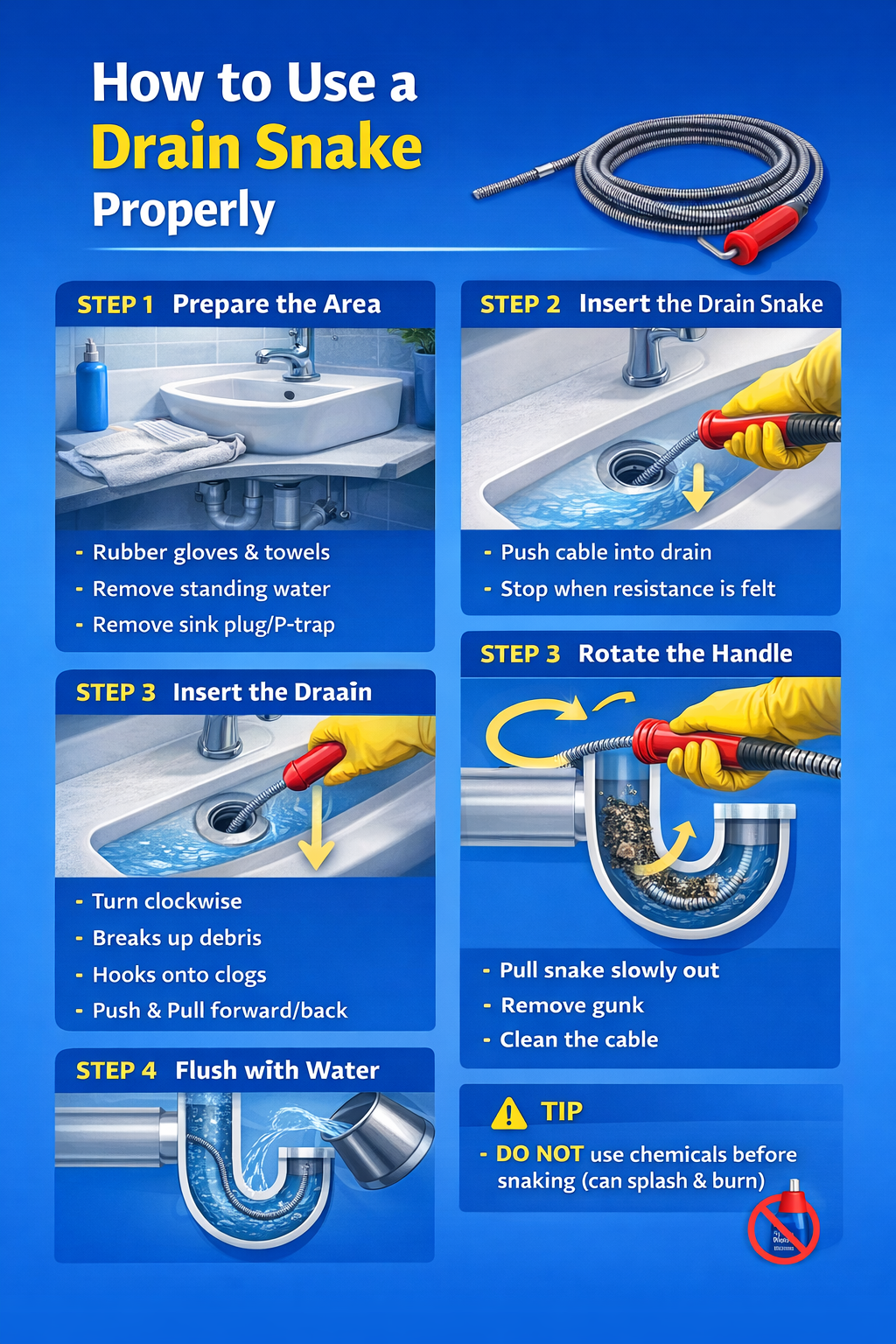
Before starting:
Wear rubber gloves
Lay down towels
Remove standing water if possible
Remove drain stopper or strainer
If working under a sink, you may remove the P-trap for easier access.
Slowly push the cable into the drain opening.
Continue feeding until you feel resistance.
Do NOT force aggressively.
Resistance means you’ve reached the clog.
Turning clockwise allows the snake to:
Hook onto hair
Break up grease
Attach to debris
Keep gentle pressure while rotating.
If stuck:
Rotate
Pull back slightly
Push forward again
This back-and-forth motion helps dislodge the blockage.
Once resistance decreases:
Slowly pull the cable out.
Remove debris from the coil.
Clean the cable immediately.
Common materials removed include:
Hair
Soap scum
Grease
Food waste
Tissue
After removal:
Run hot water for 2–3 minutes.
Check if drainage improves.
Repeat process if necessary.
For kitchen drains, follow up with boiling water to clear grease residue.
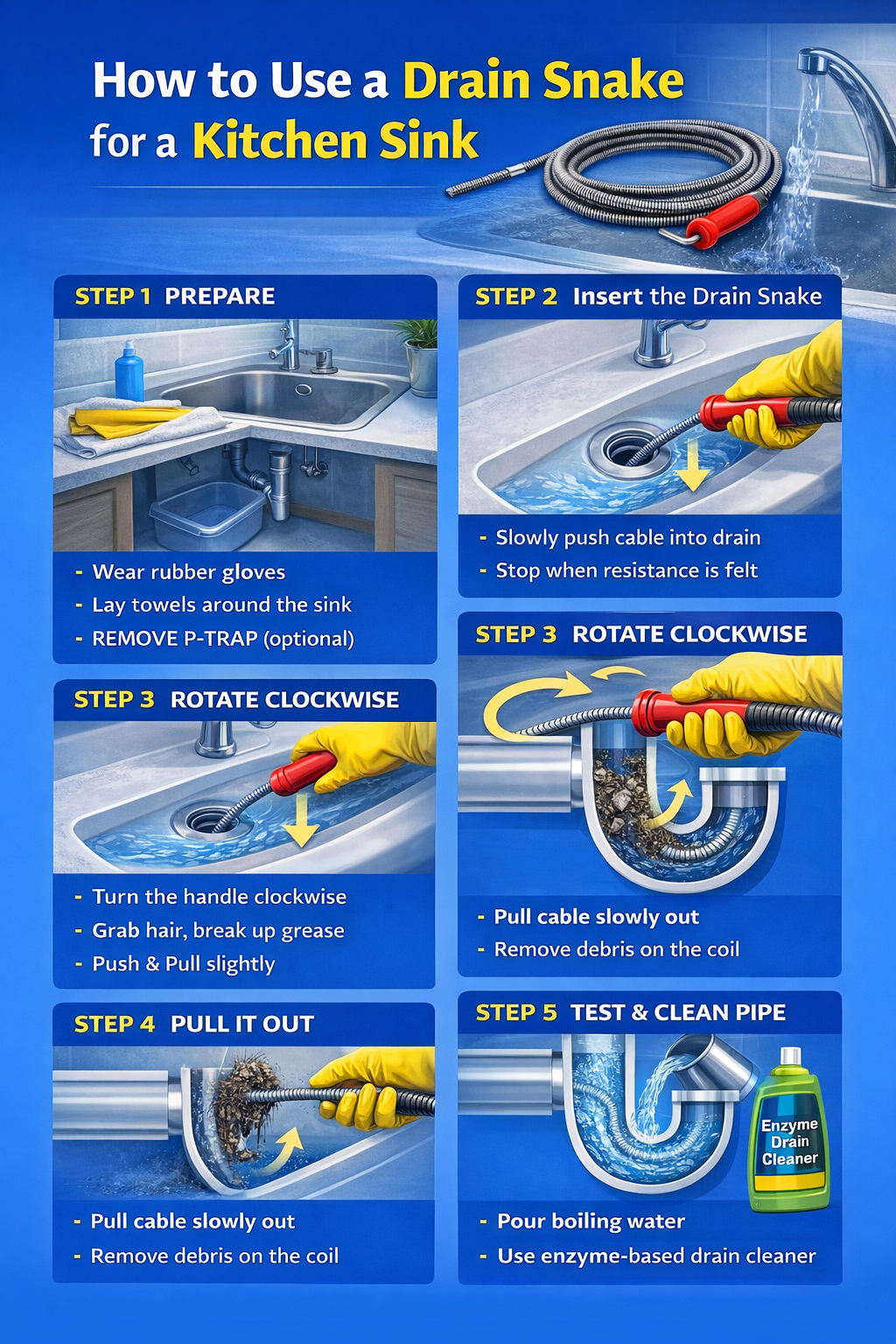
Kitchen clogs are usually caused by:
Grease buildup
Food particles
Coffee grounds
Soap residue
Important tip:
A drain snake removes solid debris but may not fully eliminate grease lining the pipe walls. After snaking:
Pour boiling water
Use an enzyme-based cleaner (not acid)
Avoid using caustic chemicals, as they damage pipes over time.
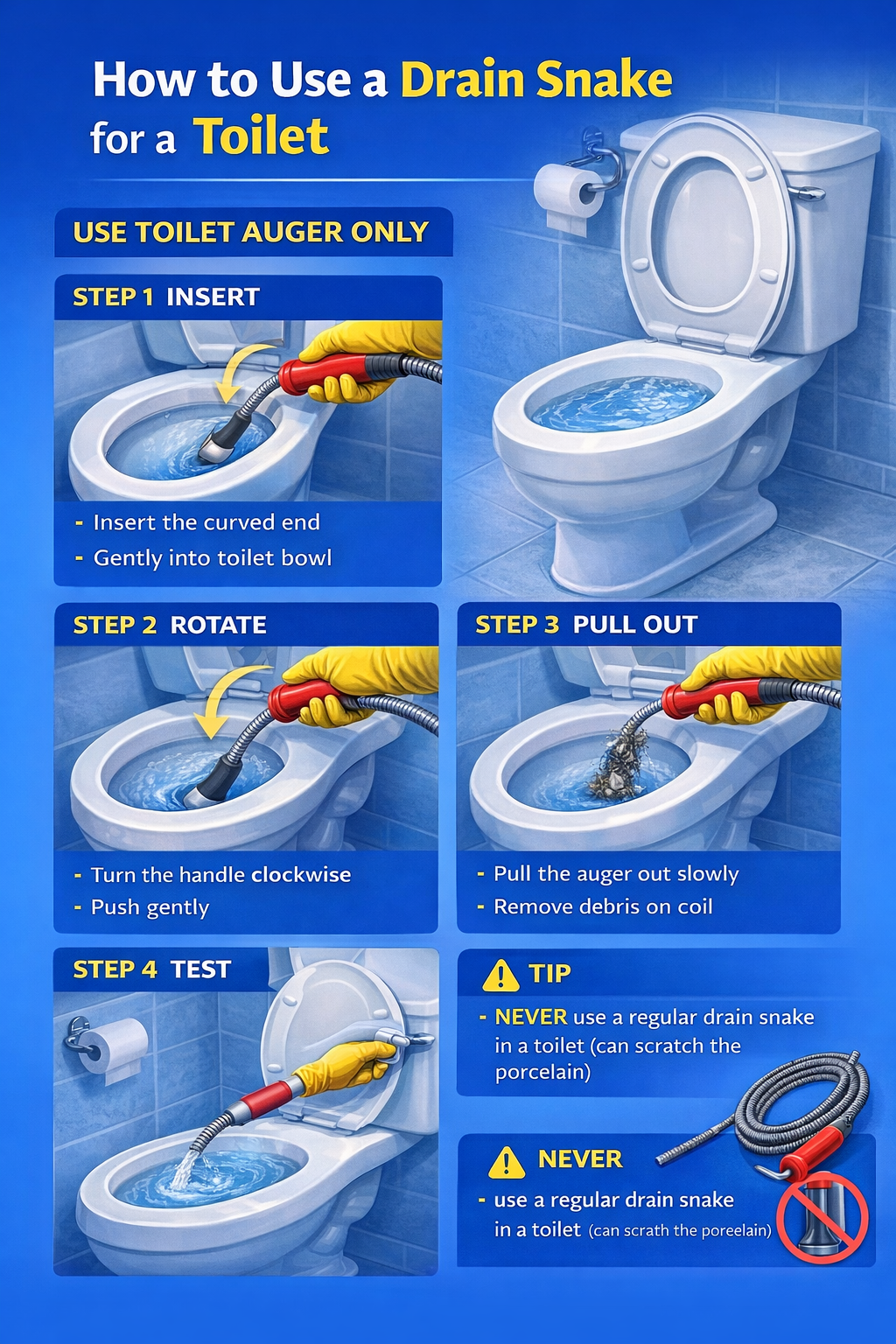
For toilets:
Use a toilet auger only
Insert curved end gently
Rotate clockwise
Push slowly
Never use a regular drain snake in a toilet, as it may scratch the porcelain bowl.
Understanding causes helps prevent future clogs.
Hair
Soap scum
Toothpaste buildup
Oil and grease
Rice and pasta
Vegetable peelings
Excess toilet paper
Wet wipes
Sanitary products
Do wear protective gloves
Do rotate clockwise only
Do clean the snake after use
Do use hot water after clearing clog
Do store the snake dry to prevent rust
Do use the correct type of auger for toilets
Don’t force the cable aggressively
Don’t use chemicals before snaking
Don’t use a regular snake in a toilet
Don’t ignore recurring blockages
Don’t push grease deeper into the system
Don’t use an electric snake without experience
Safety should always come first.
Wear gloves and eye protection.
Avoid loose clothing near electric augers.
Keep children away from tools.
Do not operate electric drain snakes without proper training.
If blockage is in the main sewer line, call a licensed plumber.
Prevention is cheaper than repair.
Install a sink strainer
Avoid pouring grease down drain
Flush with hot water weekly
Use hair catchers
Clean drains monthly
Avoid flushing wipes
Install grease traps
Schedule regular maintenance
Use enzyme drain treatments weekly
Call a professional if:
Water backs up into multiple drains
There is a sewage smell
Blockage keeps returning
Main drain line is clogged
Pipes are damaged
Persistent clogs may indicate:
Tree root intrusion
Collapsed pipe
Heavy grease solidification
Yes, if used aggressively or incorrectly. Always rotate gently and avoid excessive force.
Push until you feel resistance. Most home snakes extend 15–25 feet.
Yes. A drain snake physically removes blockages without damaging pipes.
Likely due to grease buildup, pipe misalignment, or deeper sewer issues.
It’s not recommended. Chemicals can splash and cause burns.
For homes: every 3–6 months.
For commercial kitchens: monthly preventive maintenance.
Using a drain snake for clogged drains offers:
Cost savings
Immediate results
Chemical-free cleaning
Eco-friendly solution
Reduced pipe damage
It is one of the most practical tools every homeowner should have.
Learning how to use a drain snake is an essential DIY plumbing skill. It allows you to remove common household blockages safely, quickly, and without relying on harmful chemicals.
Whether you’re dealing with a clogged kitchen sink, blocked shower drain, or toilet blockage, a drain snake is an effective and affordable solution.
However, always remember:
Use the correct tool
Follow proper technique
Avoid excessive force
Maintain your drains regularly
For recurring or severe blockages, professional inspection may be required to prevent long-term damage.
By following this guide, you can confidently handle most minor drain issues and keep your plumbing system flowing smoothly.

 How to create new field